
Bumps, Blemishes & What's Up With Your Feet: Understanding Foot Skin Issues
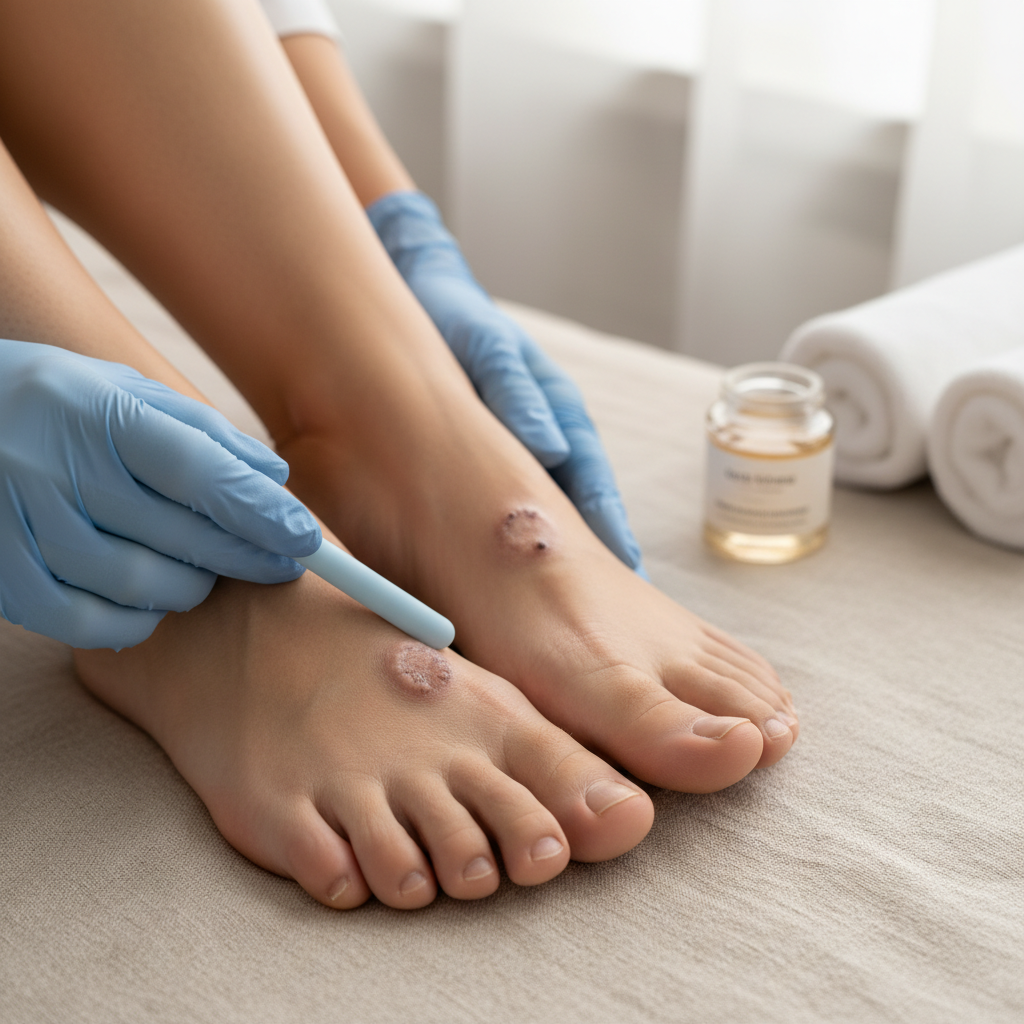
Ever noticed a bump or an odd patch of skin on your foot and wondered what it was? You're not alone! Our feet, being constantly used, can develop various skin conditions that deserve attention.
Have you ever looked down at your feet and spotted something unusual – a rough patch, a small bump, or something that just didn't look quite right? Our feet work hard for us every day, carrying our weight and taking us wherever we need to go. With all that activity, it's not surprising they can develop various skin conditions, from simple dryness to more persistent issues like warts.
Let's chat about some common skin concerns we see at Foot Health Centers, and what you can do about them.
Pesky Plantar Warts
Warts are a common complaint. These small, rough growths on the soles of your feet are caused by a virus called Human Papillomavirus (HPV). They often look grainy, fleshy, and can have tiny black dots in the center. Because they're on a weight-bearing part of your body, plantar warts can be quite painful, feeling like a pebble in your shoe.
They're often picked up in warm, moist environments like public showers, locker rooms, or swimming pools. The good news is they're usually harmless, but they can be stubborn to get rid of.
* **At-Home Tip:** Keep your feet clean and dry. Avoid walking barefoot in public areas. If you have a wart, don't pick at it, as this can spread the virus. Over-the-counter wart treatments containing salicylic acid can sometimes help, but always follow package directions carefully.
Athlete's Foot (Tinea Pedis)
Despite the name, you don't have to be an athlete to get athlete's foot! This common fungal infection typically appears between your toes, but can spread to the soles and sides of your feet. It often causes itching, stinging, burning, redness, and can make your skin look flaky, cracked, or even blistered.
This fungus thrives in warm, moist conditions, much like warts. Sweaty feet and tight shoes are prime environments for it to grow.
* **At-Home Tip:** Keep your feet and the spaces between your toes as dry as possible. Change your socks frequently, especially if your feet get sweaty. Choose breathable footwear. Over-the-counter antifungal creams, powders, or sprays can be very effective if used consistently.
Dry, Cracked Heels and Fissures
Many people experience dry skin on their feet, especially on the heels. This can range from mild flakiness to deep, painful cracks called fissures. While often just a cosmetic concern, deep fissures can be quite uncomfortable and even become infected if left untreated.
Factors like prolonged standing, wearing open-backed shoes, cold weather, and certain medical conditions can contribute to dry, cracked heels.
* **At-Home Tip:** Moisturize your feet daily, preferably after a shower, while your skin is still damp. Look for thick creams or ointments containing ingredients like urea or lactic acid, which help to soften hardened skin. Gently use a pumice stone on rough areas after soaking your feet, but don't overdo it.
When to See a Podiatrist (Dr. Lyons or Dr. Wenzler)
While many minor foot skin conditions can be managed at home, there are times when professional help is essential. Don't hesitate to give us a call if:
* A skin condition on your foot is causing significant pain or discomfort. * It's spreading or getting worse despite home treatment. * You notice any signs of infection, such as redness, swelling, increased pain, or pus. * You have diabetes or another condition that affects circulation or sensation in your feet, as even minor issues can become serious. * You're just unsure what's going on – it's always best to get a professional opinion.
Dr. Michael Lyons and Dr. Robert Wenzler at Foot Health Centers in Hernando and Southaven, MS, are here to help you keep your feet healthy and comfortable. We can accurately diagnose your foot skin condition and provide effective treatment options, putting you back on the path to happy feet.
Educational content only. Not a substitute for professional medical advice, diagnosis, or treatment. If you are experiencing foot or ankle pain, please schedule an appointment with our office.