
Smooth Steps: Understanding and Treating Calluses, Corns, and Cracked Heels
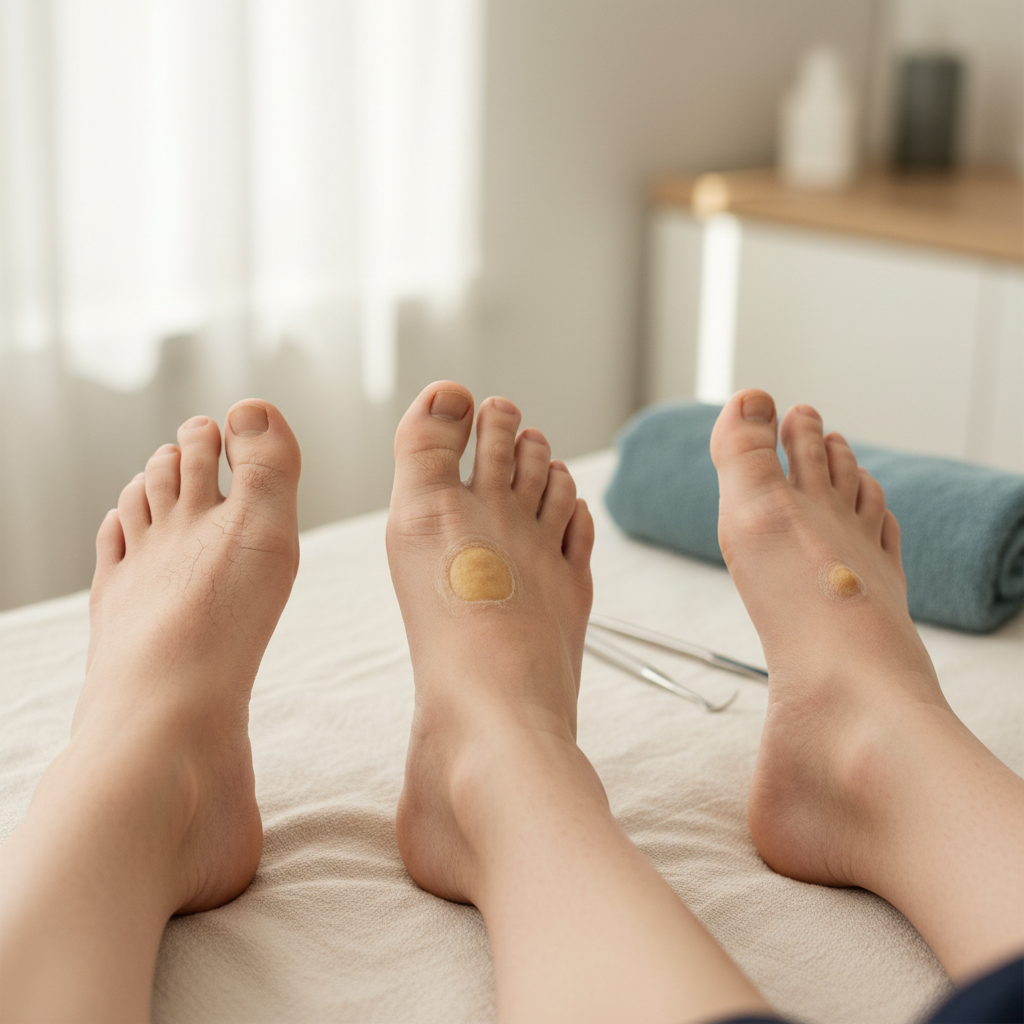
Ever wonder why your feet sometimes feel rough or develop hard spots? Let's explore those common foot nuisances – calluses, corns, and cracked heels – and discover simple ways to keep your feet happy and comfortable.
Do your feet sometimes feel like they've walked a thousand miles, even when you haven't? From rough patches to painful spots, calluses, corns, and cracked heels are common concerns that can make every step a little less comfortable.
At Foot Health Centers in Hernando and Southaven, MS, Dr. Michael Lyons and Dr. Robert Wenzler understand how much healthy, happy feet contribute to your overall well-being. Let's break down these common foot issues and share some simple ways to keep your feet feeling their best.
What are Calluses?
Think of a callus as your body's natural protective shield. When your skin experiences repeated pressure or friction – like from ill-fitting shoes or walking barefoot on hard surfaces – it thickens to protect itself. Calluses are generally broad, flattened areas of hardened skin, often found on the soles of your feet, especially under the balls or on the heels.
They're usually not painful unless they become very thick or crack.
And Corns?
Corns are like calluses' more focused, often more painful, cousins. Instead of a broad area, a corn is a small, concentrated spot of thickened, hardened skin, often with a central core. They usually develop on non-weight-bearing parts of the foot, like on top of or between toes, or on the sides of the feet. They are also caused by pressure or friction, often from shoes that rub or squeeze.
Corns can be very tender, especially when pressed.
What About Cracked Heels?
Cracked heels, or heel fissures, occur when the skin around the heel becomes dry and thick, losing its elasticity. As you walk, the fat pad under your heel expands to absorb impact. If the skin is dry and stiff, it can't stretch and may split, leading to painful cracks. These can range from shallow, cosmetic lines to deep, bleeding fissures that are prone to infection.
Common causes include dry skin, prolonged standing, open-backed shoes, and certain medical conditions.
Practical At-Home Tips for Happy Feet
Good news! Many of these common issues can be managed with consistent at-home care:
- **Moisturize Regularly:** This is key for preventing and treating dry, cracked heels. Apply a rich foot cream or lotion daily, especially after bathing, focusing on your heels. Products containing urea or lactic acid can be very effective.
- **Wear Proper Shoes:** This is perhaps the most important tip! Choose shoes that fit well, provide good support, and have adequate cushioning. Avoid shoes that squeeze your toes or rub against areas of your foot. Low or moderate heels are generally better than high heels for everyday wear.
- **Use Protective Pads:** For corns or calluses, over-the-counter moleskin or donut-shaped pads can reduce pressure on sensitive areas. Just be careful with medicated pads, especially if you have diabetes or poor circulation.
- **Gentle Exfoliation:** For calluses and mild cracked heels, regularly use a pumice stone or foot file on damp skin (after a shower or foot soak) to gently reduce thickened skin. Be gentle and don't overdo it!
- **Keep Feet Clean and Dry:** This helps prevent infections, especially if you have any small cracks.
When to See a Podiatrist
While home care is a great start, there are times when it's best to seek professional help from Dr. Lyons or Dr. Wenzler at Foot Health Centers.
- **If you have diabetes, poor circulation, or nerve damage.** These conditions put you at higher risk for complications like infections, and you should never attempt to treat corns, calluses, or cracked heels yourself.
- **If the corns, calluses, or cracked heels are painful, bleeding, or show signs of infection** (redness, swelling, warmth, pus).
- **If home treatments aren't working** or the problem keeps returning.
- **If you can't reach your feet** to care for them properly.
We can safely and effectively remove thickened skin, identify underlying causes, and provide custom orthotics or shoe recommendations to prevent recurrence. Don't let foot discomfort limit your life – reach out to our team in Hernando or Southaven, MS, for expert care and advice!
Educational content only. Not a substitute for professional medical advice, diagnosis, or treatment. If you are experiencing foot or ankle pain, please schedule an appointment with our office.